PUBLICATION DESIGN
Kisho Kurokawa
A publication design to showcase the works by Kisho Kurokawa in commemoration of the recent deconstruction of the Nakagin Capsule Hotel.
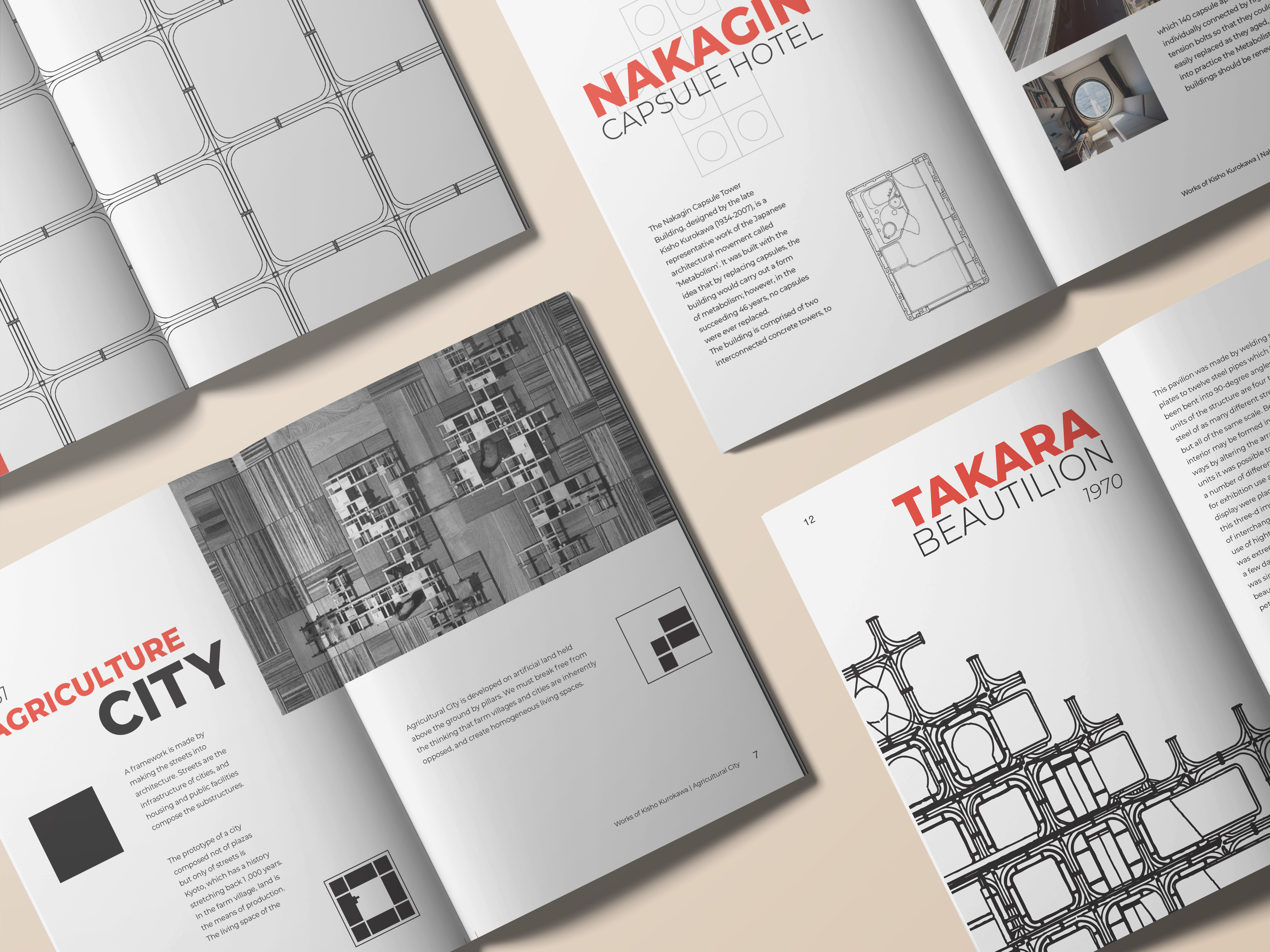
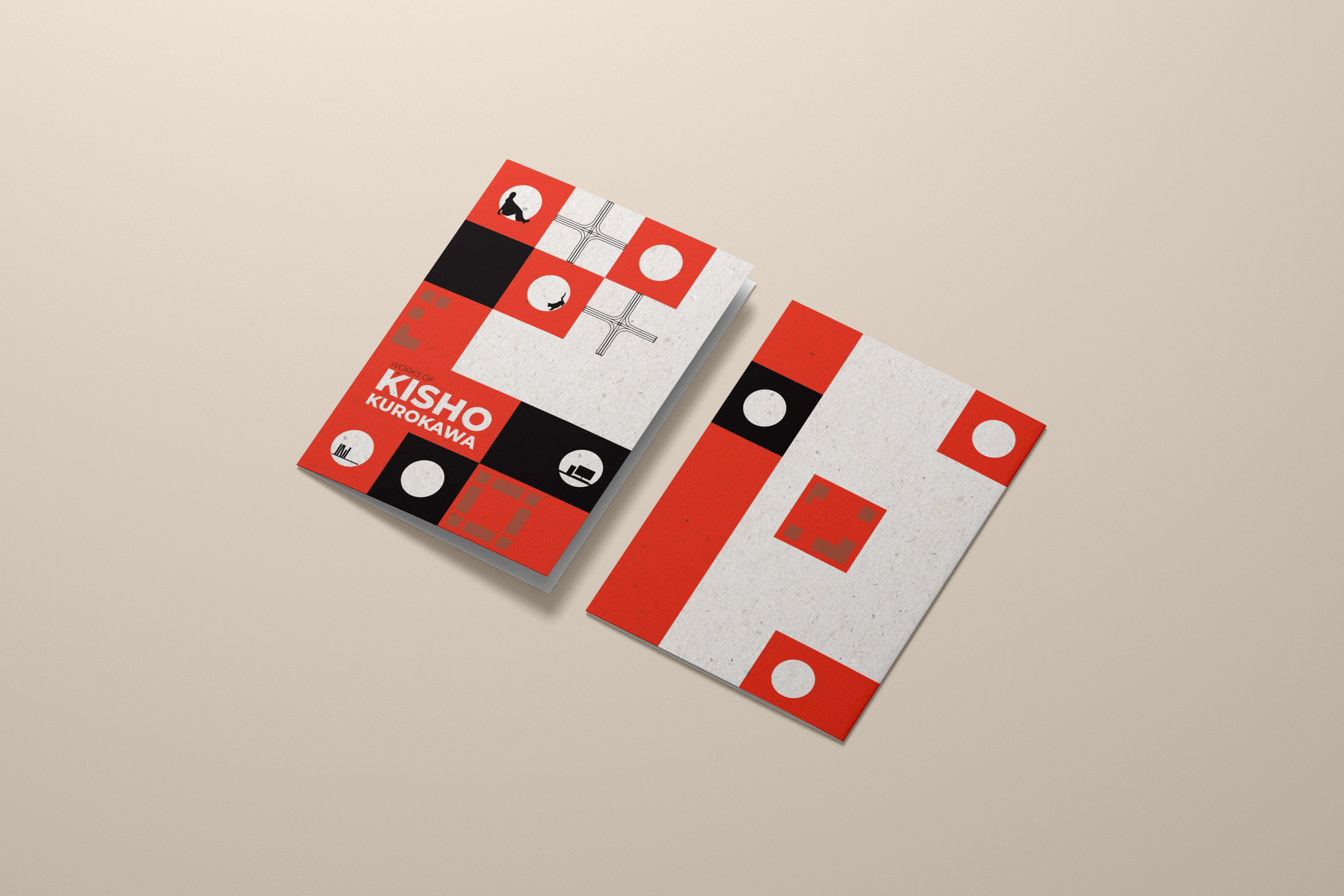
A publication design to showcase the works by Kisho Kurokawa in commemoration of the recent deconstruction of the Nakagin Capsule Hotel.
Kisho Kurokawa was a pioneering Japanese architect and one of the founding members of the Metabolist Movement in the 1960s. His works stand out for their forward-thinking approach to architecture—emphasizing adaptability, impermanence, and the fusion of traditional Japanese philosophies with modern technology. Iconic projects like the Nakagin Capsule Tower exemplify his vision of modular living and urban flexibility, concepts that remain highly relevant in today’s discussions on sustainability and urban density. Featuring Kurokawa in this publication not only pays tribute to his legacy but also brings critical insight into the cyclical nature of design, society, and architecture.
The publication was designed with Kurokawa’s architectural ethos at its core—most notably, the principles of modularity and impermanence drawn from the Nakagin Capsule Tower and the broader Metabolist movement. Structurally, the layout adopts a modular grid system, allowing each section or “capsule” of content to function independently yet remain part of a cohesive whole.
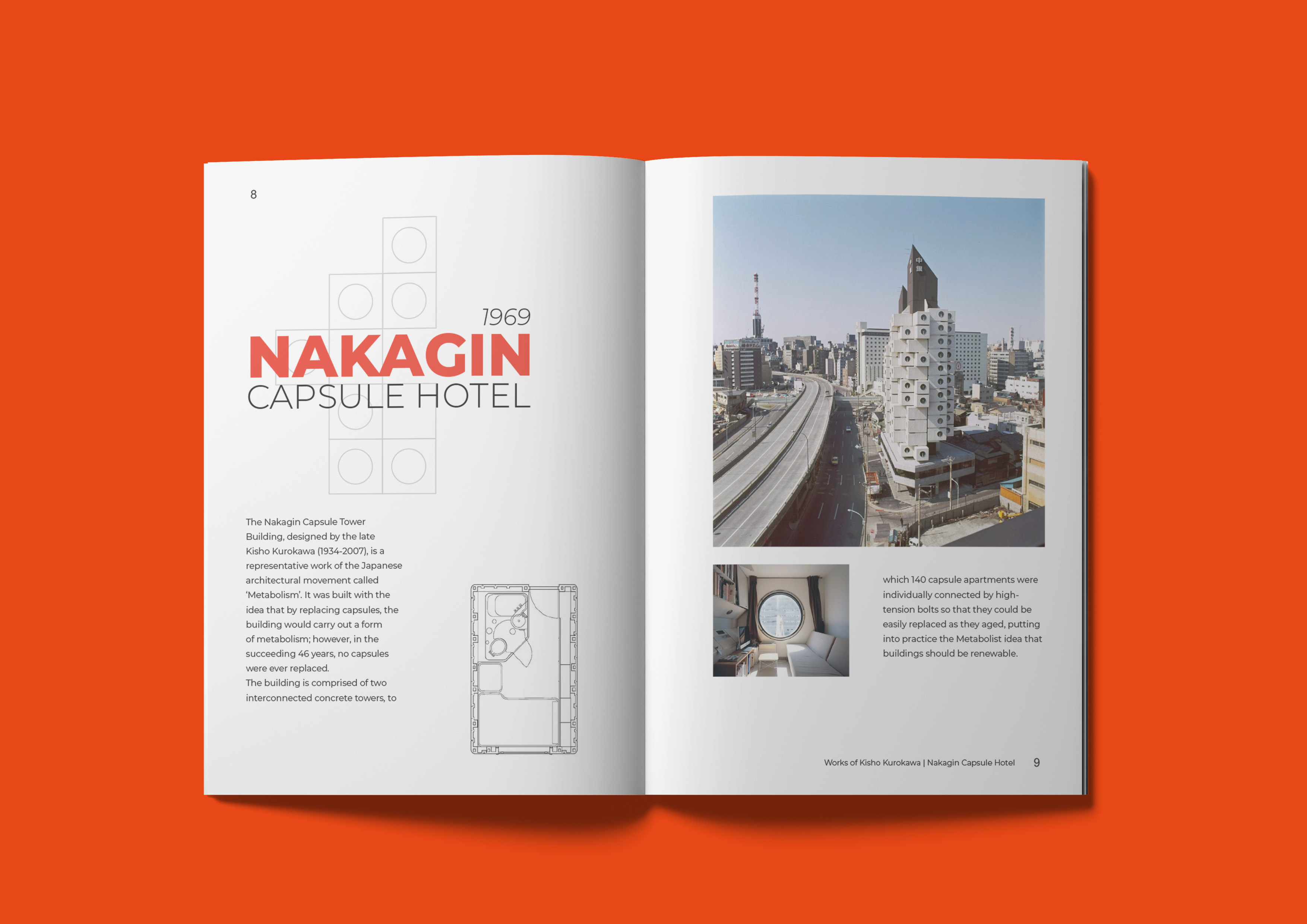

Kisho Kurokawa’s architectural philosophy—rooted in impermanence, adaptability, and the metabolist vision of organic urban growth—naturally lends itself to a digital platform. An e-publication allows his ever-evolving ideas to be represented in a medium that reflects his values: non-static, modular, and future-oriented. The digital format enables interactive storytelling through layered visuals, expandable timelines, and embedded multimedia that convey the complexity of his concepts far beyond the limits of print. Readers can engage with archival materials, moving imagery, and evolving case studies that mirror the life-cycle thinking present in his works. In essence, an e-publication becomes more than a vessel for his legacy—it becomes a living archive that honors his belief in architecture as a process, not a product.
